




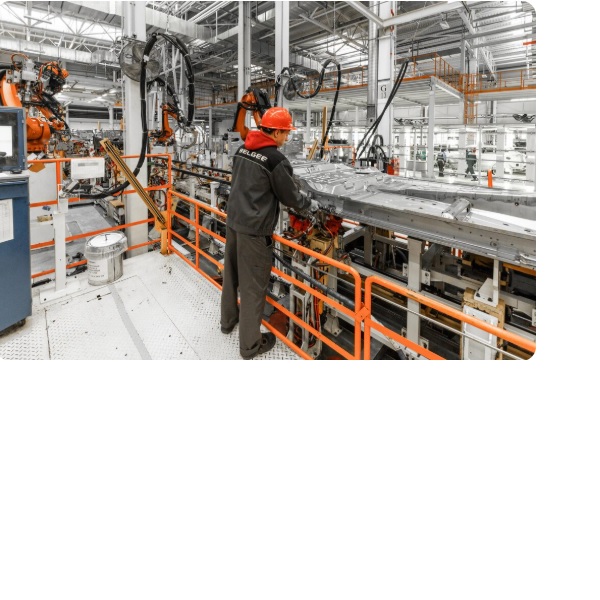
Manufacturing has always had a way of reinventing itself right when people start predicting its slowdown. That pattern is holding steady as advanced materials step into a starring role. Industries that once moved with the pace of heavy machinery now move with the speed of new chemistry and engineered compounds. Companies are experimenting with materials that behave smarter, last longer, and waste less. The energy around this shift feels grounded, not flashy, because it grows from practical gains that matter to anyone building physical products in a tough economy. The conversation is less about novelty and more about choices that genuinely change what factories can do.
Materials science often feels like the quiet heartbeat of manufacturing. When a new resin, alloy, or composite shows promise, the ripple effect tends to land in every part of a supply chain. Those ripples are turning into waves as businesses try to align cost, performance, and timelines with rising consumer expectations. No one wants to throw money at solutions that only work on paper. Decision makers want materials that cut lead times, shrink waste, and hold up under real conditions. The advantage belongs to processes that strike that balance without bogging teams down.
Reframing Early Stage Production
Material choice usually starts long before a product ever reaches a plant floor. Early prototyping is where new ideas tend to fall apart or take flight. Polymer based processes have become a favorite for companies trying to rework their development cycles without losing control of quality. Teams appreciate methods that scale up or down and adapt to design changes without draining budgets. In that context, many turn to options that let them test geometries and mechanics at a lower cost while still maintaining professional grade accuracy. That flexibility creates room for experimentation during a phase where mistakes are both expected and expensive.
The ability to save money with Urethane casting services which are ideal for high-quality, low production runs has proven to be a steady anchor for teams who need prototypes that actually behave like the final product. It is a moment where cost efficiency never feels like a compromise. Instead, the process gives engineers breathing room to adjust designs, validate functions, and avoid pushing a flawed idea through a wider pipeline.
Where Material Performance Becomes Strategy
If advanced materials felt like a niche topic before, that moment has passed. Companies now build strategies around them. Engineers are no longer looking for the toughest or lightest material in isolation. They want the one that aligns with real production goals. Composites that were once reserved for aerospace or defense are finding a home in consumer products. Metals that balance strength and machinability are earning attention from startups trying to move quickly without sacrificing safety.
This shift reflects a broader pattern. Stronger materials allow products to shrink without losing performance. Heat resistant compounds enable designs that used to be considered unrealistic. Even incremental improvements can change costs when multiplied across thousands of units. These gains create a steady drumbeat that encourages companies to revisit assumptions about what is possible.
The Subtle Revolution Within Scalable Manufacturing
Once a product leaves the prototype phase, the stakes rise. At higher volumes, small inefficiencies balloon into real financial pressure. This is where advanced materials intersect with production methods in a way that changes outcomes. Refinements in molding, machining, and forming processes allow companies to capture performance benefits at scale rather than treating them as luxuries.
A good example is the ongoing evolution of injection molding. The process itself is not new, but the materials flowing through those molds look nothing like the catalog from a generation ago. High flow resins reduce cycle times. Reinforced polymers replace metal in applications that would have sounded overly ambitious not long ago. These gains accumulate quietly, but they reshape margins in ways companies feel immediately. Growth minded teams lean into this because time saved is often money earned.
Balancing Innovation With Practical Constraints
One of the easier traps in materials conversations is assuming that every project needs the latest compound or cutting edge formula. Reality has a different tone. Companies need a mix of established materials and new ones, and the winners are those who match the right tool to the right stage. Advanced materials are not meant to replace fundamentals. They are meant to widen the toolbox.
Manufacturers still need to consider supply stability, machining compatibility, regulatory expectations, and the comfort level of their workforce. It is not helpful to introduce a material that slows down the entire operation because no one knows how to handle it. Successful adoption hinges on processes that do not create friction. The goal is progress that supports people rather than outpaces them.
A Broader View Of What Comes Next
The rise of advanced materials has brought a useful kind of optimism back into manufacturing circles. Not the blind faith of a trend cycle, but confidence rooted in practical results. Companies that embrace smarter materials often find that they open doors to design ideas that once felt out of reach. These ideas do not always require a full rebuild of a production line. Sometimes a single updated component or a new resin grade can change the trajectory of an entire product. The beauty is in the cumulative effect.
Engineers and leaders talk about these developments with a quiet steadiness. They have seen enough cycles to know that hype does not build better products, but thoughtful choices do. Advanced materials simply give teams more ways to hit their targets without unnecessary tradeoffs. That shift is real, and it is arriving at a steady pace rather than a dramatic rush.
The industry feels grounded as it moves forward with advanced materials guiding many of the decisions shaping modern production. The energy comes from the sense that better choices are finally accessible instead of aspirational. Manufacturers want progress that stays connected to common sense, and this wave of material innovation delivers exactly that.